


Konverge
(olmasartan medoxomil/ Amplodipine)

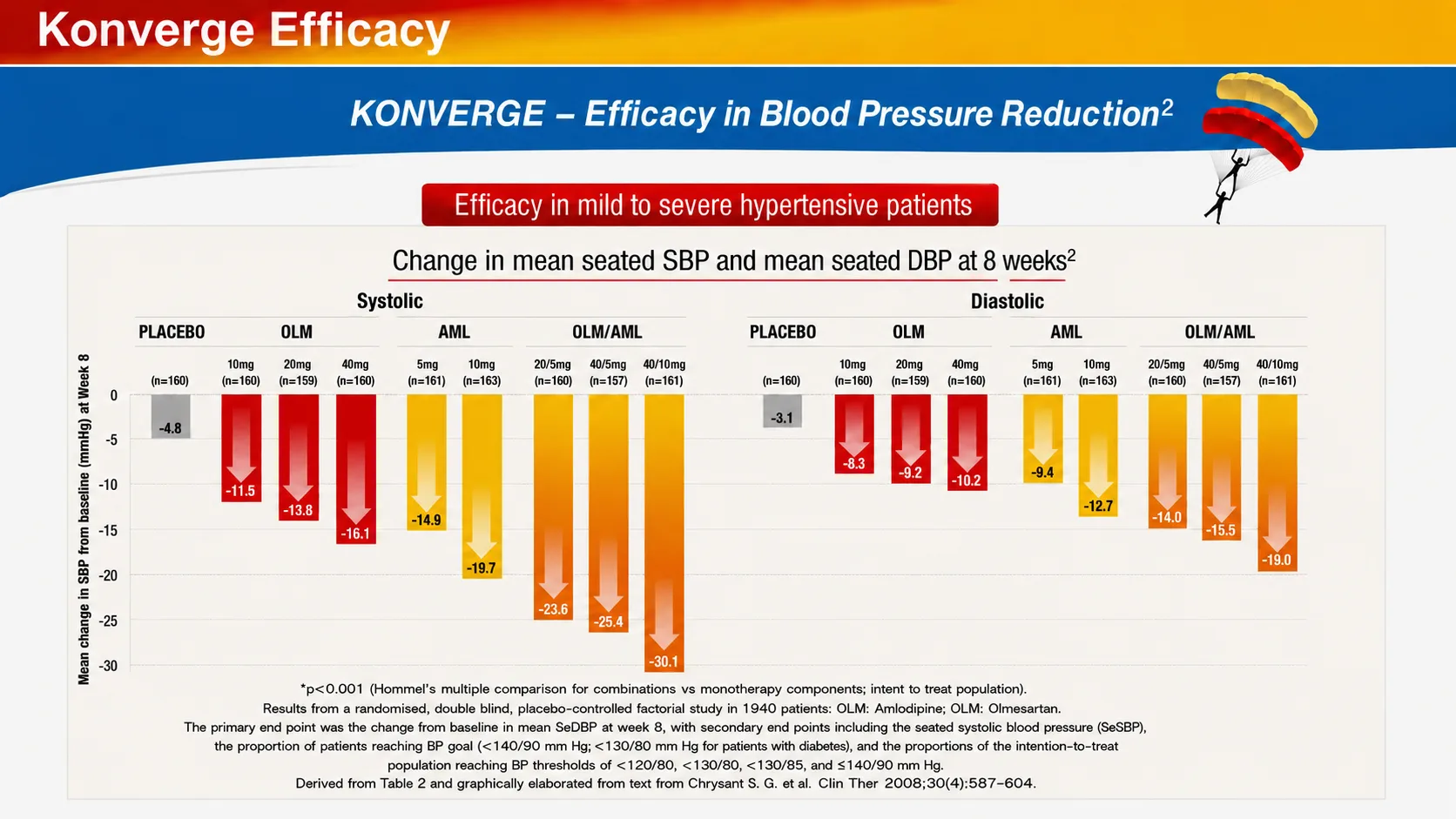
Reference: 2. Chrysant S. G. et al. Clin Ther 2008;30(4):587-604
Guidelines
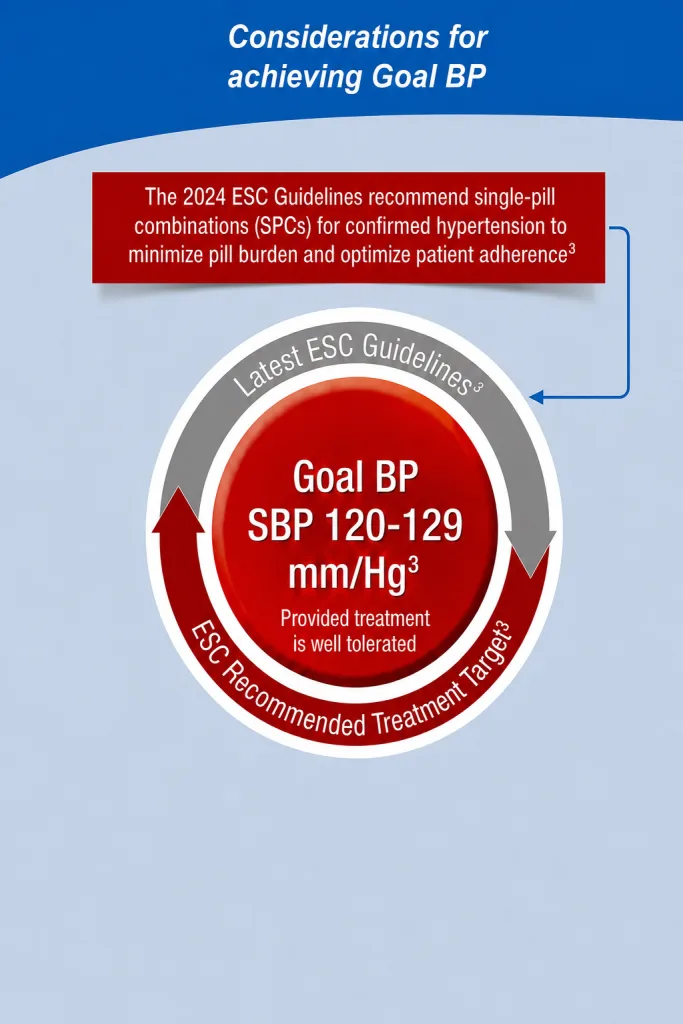
Reference: 3. McEvoy et al 2024, European Heart Journal (2024) 45, 3912–4018.
Konverge Dosage
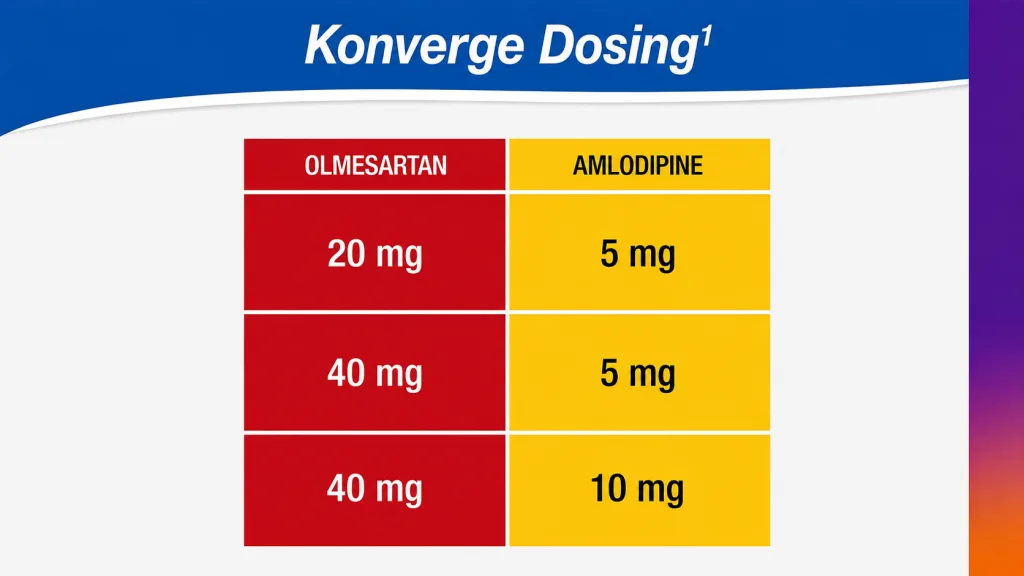
Reference: 1. Konverge SmPC January 2025
Konverge Indication
Konverge Safety
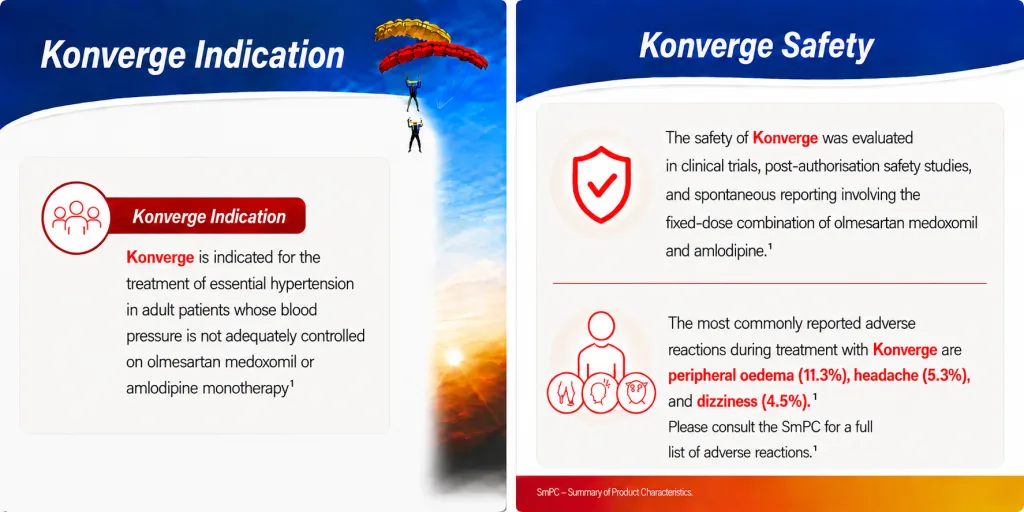
Reference: 1. Konverge SmPC January 2025
Abbreviated Prescribing Information: Konverge 20 mg/5 mg, 40 mg/5 mg and 40 mg/10 mg film-coated tablets (olmesartan medoxomil/amlodipine).
Prescribing information: Please consult the Summary of Product Characteristics (SmPC) for full prescribing information.
Presentation: Film-coated tablets containing 20 mg of olmesartan medoxomil and 5 mg of amlodipine (as amlodipine besilate) or 40 mg of olmesartan medoxomil and 5 mg of amlodipine (as amlodipine besilate) or 40 mg of olmesartan medoxomil and 10 mg of amlodipine (as amlodipine besilate).
Use: Treatment of essential hypertension in adult patients whose blood pressure is not adequately controlled on olmesartan medoxomil or amlodipine monotherapy.
Dosage: Oral administration. Adults (18-65 years): Recommended dose is 1 tablet daily. Elderly (65 years or over): No dose adjustment generally required but increase dosage with care. If up-titration to maximum dosage required, monitor blood pressure closely. Severe renal impairment: Not recommended. Patients with mild to moderate renal impairment: Maximum daily dose of olmesartan medoxomil is 20 mg. Monitor potassium levels and creatinine. Severe hepatic impairment: Contraindicated. Patients with mild to moderate hepatic impairment: Use with caution. Starting dose 10 mg olmesartan medoxomil daily. Maximum daily dose of olmesartan medoxomil is 20 mg. Monitor blood pressure and renal function. Initiate amlodipine at the lowest dose and titrate slowly. Children and adolescents under 18 years: Not recommended.
Contraindications: Hypersensitivity to any component. Second or third trimesters of pregnancy. Patients with severe hepatic insufficiency or biliary obstruction, severe hypotension, shock (including cardiogenic shock), obstruction of the outflow tract of the left ventricle, haemodynamically unstable heart failure after acute myocardial infarction. Concomitant use with aliskiren-containing products in patients with diabetes mellitus or renal impairment.
Warnings and Precautions: Correct intravascular volume depletion before administering olmesartan medoxomil or maintain close medical supervision. In patients with other conditions associated with stimulation of renin-angiotensin-aldosterone system, possible side effects include acute hypotension, azotaemia, oliguria or, rarely, acute renal failure. Increased risk of severe hypotension and renal insufficiency in patients with bilateral renal artery stenosis or stenosis of the artery to a single functioning kidney. Periodic monitoring of serum and potassium levels is recommended in patients with impaired renal function and kidney transplantation. Not recommended in patients with severe renal impairment. Combined use of ACE-inhibitors, angiotensin II receptor blockers or aliskiren is not recommended. If considered absolutely necessary, use under specialist supervision with frequent close monitoring of renal function, electrolytes and blood pressure. Do not use concomitantly in patients with diabetic nephropathy. Take care in mild to moderate hepatic impairment. Initiate amlodipine at the lowest dose and use with caution for initial treatment and when increasing dose. Hyperkalaemia, risk factors include renal impairment, and/or heart failure. Monitoring of serum potassium in patients at risk of hyperkalaemia is recommended. Concomitant use of potassium containing and sparing products should be undertaken with caution and potassium levels monitored frequently. Not recommended for combination use with lithium. Special caution is recommended in patients suffering from aortic or mitral valve stenosis, or obstructive hypertrophic cardiomyopathy. Not recommended in patients with primary aldosteronism. Changes in renal function in susceptible individuals with heart failure. In patients with severe heart failure whose renal function may depend on the activity of the renin-angiotensin-aldosterone system, treatment with ACE inhibitors and angiotensin receptor antagonists has been associated with oliguria and/or progressive azotaemia and (rarely) with acute renal failure and/or death. Use with caution in patients with heart failure. Sprue-like enteropathy reported in very rare cases, in absence of other etiologies immediately discontinue treatment. Intestinal angioedema has been reported in patients treated with angiotensin II receptor antagonists. If intestinal angioedema is diagnosed, olmesartan should be discontinued and appropriate monitoring should be initiated until complete resolution of symptoms has occurred. The blood pressure lowering effect of olmesartan medoxomil is somewhat less in black patients than non-black patients. Increase dose with care in the elderly . Do not initiate during pregnancy. Discontinue as soon as possible if pregnancy occurs during therapy. Excessive blood pressure decrease in patients with ischaemic heart disease or ischaemic cerebrovascular disease could result in a myocardial infarction or stroke.
Interactions: The blood pressure lowering effect of Konverge can be increased by concomitant use with other antihypertensive medicinal products. Olmesartan medoxomil component: Not recommended for concomitant use with ACE-inhibitors, angiotensin II receptor blockers, aliskiren, drugs affecting potassium levels, lithium. Caution with concomitant use of NSAIDs and angiotensin II antagonists. Amlodipine component: Caution with concomitant use with CYP3A4 inhibitors and CYP3A4 inducers. Dantrolene (infusion): avoid co-administration in patients susceptible to malignant hyperthermia and in its management. Limit dose of simvastatin in patients on amlodipine to 20 mg daily. Consider administration at least 4 hours before colesevelam dose to decrease interaction effect. Tacrolimus: monitor blood levels and adjust dose as appropriate. Ciclosporin: monitor trough levels and reduce dose as necessary. mTOR inhibitors are CYP3A substrates. Amlodipine is a weak CYP3A inhibitor. With concomitant use of mTOR inhibitors, amlodipine may increase exposure of mTOR inhibitors.
Olopatadine: No interactions with other drugs expected. Mometasone Furoate: Co-treatment with CYP3A inhibitors should be avoided unless the benefit outweighs the increased risk of systemic corticosteroid side-effects and patients should be monitored.
Pregnancy and Lactation: Do not use in the first trimester and discontinue as soon as possible if pregnancy occurs during therapy. Contraindicated in second and third trimesters of pregnancy. Not recommended during lactation, change to alternative therapy, if appropriate.
Side-effects: Olmesartan/amlodipine combination: Common: dizziness, headache, fatigue, oedema, peripheral oedema, pitting oedema. Uncommon: hyperkalaemia, libido decreased, hypoaesthesia, lethargy, paraesthesia, postural dizziness, vertigo, palpitations, tachycardia, hypotension, orthostatic hypotension, cough, dyspnoea, constipation, diarrhoea, dry mouth, dyspepsia, nausea, upper abdominal pain, vomiting, rash, back pain, muscle spasm, pain in extremity, pollakiuria, erectile dysfunction/impotence, asthenia, blood creatinine increased, blood potassium decreased, blood uric acid increased, gamma glutamyl transferase increased. Rare: allergic reaction/drug hypersensitivity, syncope, flushing, urticaria, face oedema.
Olmesartan: Common: hypertriglyceridaemia, hyperuricaemia, dizziness, headache, bronchitis, cough, pharyngitis, rhinitis, abdominal pain, diarrhoea, dyspepsia, gastroenteritis, nausea, hepatic enzyme increased, arthritis, back pain, skeletal pain, haematuria, urinary tract infection, chest pain, fatigue, influenza-like symptoms, pain, peripheral oedema, blood creatine phosphokinase increased, blood urea increased. Uncommon: thrombocytopenia, anaphylactic reaction, vertigo, angina pectoris, vomiting, allergic dermatitis, exanthema, pruritus, rash, urticaria, myalgia, asthenia, face oedema, malaise. Rare: hyperkalaemia, hypotension, angioneurotic oedema, muscle spasm, acute renal failure, renal insufficiency, lethargy, blood creatinine increased.
Amlodipine: Very Common: oedema. Common: dizziness, headache, somnolence, visual disturbance, palpitations, flushing, dyspnoea, abdominal pain, altered bowel habits, dyspepsia, nausea, ankle swelling, muscle spasm, asthenia, fatigue. Uncommon: depression, insomnia, irritability, mood changes, dysgeusia, hypoaesthesia, paraesthesia, sleep disorder, syncope, tremor, tinnitus, angina pectoris, arrhythmia, hypotension, cough, rhinitis, altered bowel habits, dry mouth, vomiting, alopecia, exanthema, hyperhydrosis, pruritus, purpura, rash, skin discolouration, urticaria, arthralgia, back pain, myalgia, increased urinary frequency, micturition disorder, nocturia, erectile dysfunction/impotence, gynecomastia, chest pain, malaise, pain, increase or decrease in weight. Rare: confusion. Very rare: leukocytopenia, thrombocytopenia, allergic reaction /drug hypersensitivity, hyperglycaemia, hypertonia, peripheral neuropathy, myocardial infarction, vasculitis, gastritis, gingival hyperplasia, pancreatitis, hepatic enzymes increased, hepatitis, jaundice, angioneurotic oedema, erythema multiforme, exfoliative dermatitis, photosensitivity, Quincke oedema, Stevens-Johnson syndrome.
Please consult the Summary of Product Characteristics for a full list of side effects.
Pack size: Blister containing 28 film-coated tablets.
Legal category: POM.
Product Authorisation Numbers: PA 865/17/1-3
Product Authorisation Holder: Menarini International Operations Luxembourg S.A, 1 Avenue de la Gare, L-1611 Luxembourg.
Marketed by: A. Menarini Pharmaceuticals Ireland Ltd.
Further information is available on request from A. Menarini Pharmaceuticals Ireland Ltd., 2nd Floor, Castlecourt, Monkstown Farm, Monkstown, Glenageary, Co. Dublin A96 T924 or may be found in the SmPC.
Date of Preparation: January 2025
Adverse events should be reported. Healthcare professionals are asked to report any suspected adverse events via: HPRA Pharmacovigilance Website: www.hpra.ie. Adverse events should also be reported to A. Menarini Pharmaceuticals Ireland Ltd. Phone no: 01 284 6744
IR-MEN-32-2026 Date of Preparation: July 2026