

Ryaltris
(olopatadine and mometasone furoate nasal spray)
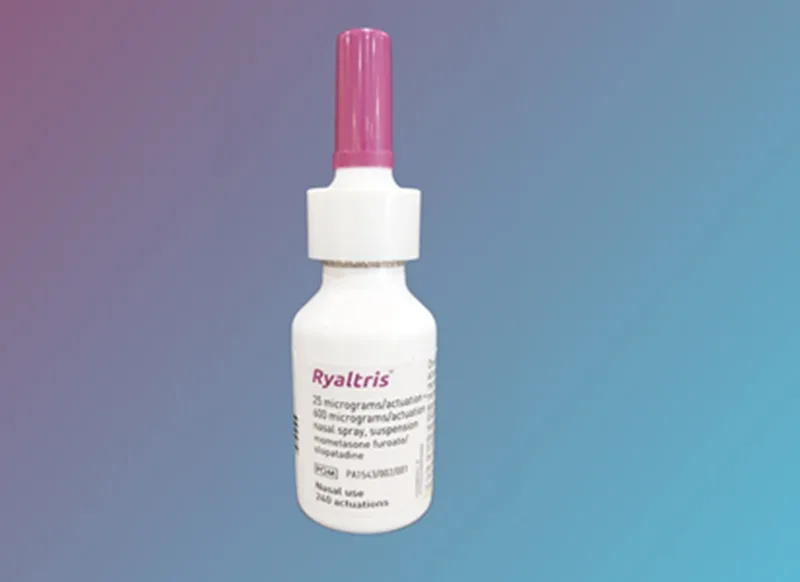
Ryaltris is indicated in adults and adolescents 12 years of age and older for the treatment of moderate to severe nasal symptoms associated with allergic rhinitis.
Product Information

Abbreviated Prescribing Information: Ryaltris 25 mcg/actuation + 600 mcg/actuation nasal spray, suspension.
Prescribing information:Please consult the Summary of Product Characteristics (SmPC) for full prescribing information.
Presentation: One delivered dose contains mometasone furoate monohydrate equivalent to 25 mcg mometasone furoate and olopatadine hydrochloride equivalent to 600 mcg olopatadine. White, homogeneous suspension.
Use: In adults and adolescents 12 years of age and older for the treatment of moderate to severe nasal symptoms associated with allergic rhinitis.
Dosage: For nasal use only. Adults and adolescents (12 years of age and over) two actuations in each nostril twice daily (morning and evening). Elderly: no dose adjustment required. Children under 12 years: not recommended. Renal and hepatic impairment: no dose adjustment expected.
Contraindications: Hypersensitivity to the active substance or to any of the excipients. Presence of untreated localised infection involving the nasal mucosa, such as herpes simplex. Recent nasal surgery or trauma until wound healing has occurred.
Warnings and Precautions: Instances of nasal ulceration and nasal septal perforation have been reported. Not recommended in case of nasal septum perforation. Patients using Ryaltris over several months or longer should be examined periodically for possible changes in the nasal mucosa and for evidence of Candida infection. Instances of epistaxis have been reported. Visual disturbance may be reported with systemic and topical corticosteroid use. Consider referral to ophthalmologist with symptoms such as blurred vision or other visual disturbances as cataract, glaucoma or rare diseases such as central serous chorioretinopathy have been reported after use of systemic and topical corticosteroids. Hypersensitivity reactions, including wheezing, may occur – discontinue. Immunosuppression: use with caution, if at all, in patients with active or quiescent tuberculous infections of the respiratory tract, untreated local or systemic fungal or bacterial infections, systemic viral or parasitic infections, or ocular herpes simplex. Potential systemic effects of corticosteroids include Cushing’s syndrome, Cushingoid features, adrenal suppression, growth retardation in children and adolescents, cataract, glaucoma and more rarely, a range of psychological or behavioural effects including psychomotor hyperactivity, sleep disorders, anxiety, depression or aggression (particularly in children). Hypercorticism and adrenal suppression may appear at higher-than-recommended dosages or in susceptible individuals at recommended dosages – discontinue slowly. Increased risk of signs or symptoms of hypercorticism and/or suppression of the HPA axis possible with concomitant use with other inhaled corticosteroids. Careful monitoring needed for acute adrenal insufficiency in response to stress in patients previously treated for prolonged periods with systemic corticosteroids and transferred to topical corticosteroids. In patients with asthma or other conditions requiring long-term systemic corticosteroid treatment, too rapid a decrease in systemic corticosteroids may cause a severe exacerbation of symptoms. Somnolence has been reported following administration of Ryaltris in clinical studies. Caution in patients operating machinery or driving a motor vehicle. Avoid concurrent use with alcohol or other central nervous system (CNS) depressants. Increased risk of antihistamine adverse effects with concomitant use of olopatadine or other antihistaminic drugs administered via nasal, ocular or oral route. Paediatric population: It is recommended that the height of children receiving prolonged treatment with nasal corticosteroids is regularly monitored. Contains 0.02 mg benzalkonium chloride in each actuation. Benzalkonium chloride may cause irritation or swelling inside the nose, especially if used for a long time.
Interactions: No interaction studies have been performed with Ryaltris. Any interactions from the combination of olopatadine and mometasone furoate are expected to reflect those of the components taken individually, no pharmacokinetic interaction between olopatadine and mometasone furoate was observed when administered in combination. Olopatadine: No interactions with other drugs expected. Mometasone Furoate: Co-treatment with CYP3A inhibitors should be avoided unless the benefit outweighs the increased risk of systemic corticosteroid side-effects and patients should be monitored.
Pregnancy and lactation:Avoid use during pregnancy unless potential benefit to mother justifies potential risk to mother, foetus or infant. Assess before prescribing in lactating mothers.
Side-effects: Common: dysgeusia, epistaxis, nasal discomfort. Uncommon: dizziness, headaches, somnolence, nasal dryness, dry mouth, abdominal pain, nausea, fatigue. Rare: bacterial vaginosis, anxiety, depression, insomnia, lethargy, migraine, blurred vision, dry eye, eye discomfort, ear pain, nasal inflammation, nasal mucosal disorder, oropharyngeal pain, sneezing, throat irritation, constipation, sore tongue, laceration. Frequency not known: pharyngitis, upper respiratory tract infection, hypersensitivity (including anaphylactic reactions, angioedema, bronchospasm, dyspnoea), cataracts, glaucoma, increased intraocular pressure and nasal septum perforation.
Pack size: One bottle containing 30ml suspension (240 actuations).
Legal category: POM.
Product Authorisation Numbers: PA 1543/002/001
Product Authorisation Holder: Glenmark Pharmaceuticals s.r.o., Hvezdova 1716/2b, 140 78 Prague 4, Czech Republic.
Marketed by: A. Menarini Pharmaceuticals Ireland Ltd.
Further information is available on request from A. Menarini Pharmaceuticals Ireland Ltd., 2nd Floor, Castlecourt, Monkstown Farm, Monkstown, Glenageary, Co. Dublin A96 T924 or may be found in the SmPC.
Last updated: December 2025
Prescribing information:Please consult the Summary of Product Characteristics (SmPC) for full prescribing information.
Presentation: One delivered dose contains mometasone furoate monohydrate equivalent to 25 mcg mometasone furoate and olopatadine hydrochloride equivalent to 600 mcg olopatadine. White, homogeneous suspension.
Use: In adults and adolescents 12 years of age and older for the treatment of moderate to severe nasal symptoms associated with allergic rhinitis.
Dosage: For nasal use only. Adults and adolescents (12 years of age and over) two actuations in each nostril twice daily (morning and evening). Elderly: no dose adjustment required. Children under 12 years: not recommended. Renal and hepatic impairment: no dose adjustment expected.
Contraindications: Hypersensitivity to the active substance or to any of the excipients. Presence of untreated localised infection involving the nasal mucosa, such as herpes simplex. Recent nasal surgery or trauma until wound healing has occurred.
Warnings and Precautions: Instances of nasal ulceration and nasal septal perforation have been reported. Not recommended in case of nasal septum perforation. Patients using Ryaltris over several months or longer should be examined periodically for possible changes in the nasal mucosa and for evidence of Candida infection. Instances of epistaxis have been reported. Visual disturbance may be reported with systemic and topical corticosteroid use. Consider referral to ophthalmologist with symptoms such as blurred vision or other visual disturbances as cataract, glaucoma or rare diseases such as central serous chorioretinopathy have been reported after use of systemic and topical corticosteroids. Hypersensitivity reactions, including wheezing, may occur – discontinue. Immunosuppression: use with caution, if at all, in patients with active or quiescent tuberculous infections of the respiratory tract, untreated local or systemic fungal or bacterial infections, systemic viral or parasitic infections, or ocular herpes simplex. Potential systemic effects of corticosteroids include Cushing’s syndrome, Cushingoid features, adrenal suppression, growth retardation in children and adolescents, cataract, glaucoma and more rarely, a range of psychological or behavioural effects including psychomotor hyperactivity, sleep disorders, anxiety, depression or aggression (particularly in children). Hypercorticism and adrenal suppression may appear at higher-than-recommended dosages or in susceptible individuals at recommended dosages – discontinue slowly. Increased risk of signs or symptoms of hypercorticism and/or suppression of the HPA axis possible with concomitant use with other inhaled corticosteroids. Careful monitoring needed for acute adrenal insufficiency in response to stress in patients previously treated for prolonged periods with systemic corticosteroids and transferred to topical corticosteroids. In patients with asthma or other conditions requiring long-term systemic corticosteroid treatment, too rapid a decrease in systemic corticosteroids may cause a severe exacerbation of symptoms. Somnolence has been reported following administration of Ryaltris in clinical studies. Caution in patients operating machinery or driving a motor vehicle. Avoid concurrent use with alcohol or other central nervous system (CNS) depressants. Increased risk of antihistamine adverse effects with concomitant use of olopatadine or other antihistaminic drugs administered via nasal, ocular or oral route. Paediatric population: It is recommended that the height of children receiving prolonged treatment with nasal corticosteroids is regularly monitored. Contains 0.02 mg benzalkonium chloride in each actuation. Benzalkonium chloride may cause irritation or swelling inside the nose, especially if used for a long time.
Interactions: No interaction studies have been performed with Ryaltris. Any interactions from the combination of olopatadine and mometasone furoate are expected to reflect those of the components taken individually, no pharmacokinetic interaction between olopatadine and mometasone furoate was observed when administered in combination. Olopatadine: No interactions with other drugs expected. Mometasone Furoate: Co-treatment with CYP3A inhibitors should be avoided unless the benefit outweighs the increased risk of systemic corticosteroid side-effects and patients should be monitored.
Pregnancy and lactation:Avoid use during pregnancy unless potential benefit to mother justifies potential risk to mother, foetus or infant. Assess before prescribing in lactating mothers.
Side-effects: Common: dysgeusia, epistaxis, nasal discomfort. Uncommon: dizziness, headaches, somnolence, nasal dryness, dry mouth, abdominal pain, nausea, fatigue. Rare: bacterial vaginosis, anxiety, depression, insomnia, lethargy, migraine, blurred vision, dry eye, eye discomfort, ear pain, nasal inflammation, nasal mucosal disorder, oropharyngeal pain, sneezing, throat irritation, constipation, sore tongue, laceration. Frequency not known: pharyngitis, upper respiratory tract infection, hypersensitivity (including anaphylactic reactions, angioedema, bronchospasm, dyspnoea), cataracts, glaucoma, increased intraocular pressure and nasal septum perforation.
Pack size: One bottle containing 30ml suspension (240 actuations).
Legal category: POM.
Product Authorisation Numbers: PA 1543/002/001
Product Authorisation Holder: Glenmark Pharmaceuticals s.r.o., Hvezdova 1716/2b, 140 78 Prague 4, Czech Republic.
Marketed by: A. Menarini Pharmaceuticals Ireland Ltd.
Further information is available on request from A. Menarini Pharmaceuticals Ireland Ltd., 2nd Floor, Castlecourt, Monkstown Farm, Monkstown, Glenageary, Co. Dublin A96 T924 or may be found in the SmPC.
Last updated: December 2025
Adverse events should be reported. Healthcare professionals are asked to report any suspected adverse events via: HPRA Pharmacovigilance Website: www.hpra.ie. Adverse events should also be reported to A. Menarini Pharmaceuticals Ireland Ltd. Phone no: 01 284 6744